Last week, I wrote about pushing the limits of science by thinking outside the box. In that sense, "thinking outside the box" is used quite figuratively to indicate how traditional thinking will not lead to new ideas, and constant innovation is necessary to achieve breakthroughs. In this post, we will examine the same concept in... Continue Reading →
Pushing the envelope – Part I
"Thinking outside the box" has become a bit of a cliché. But in science it is more important than ever. As the base of human knowledge propels ahead with lightning speed, it takes a special set of skills and knowledge to be on the cutting edge of innovation. When I was in graduate school, there... Continue Reading →
Mental peace amidst chaos
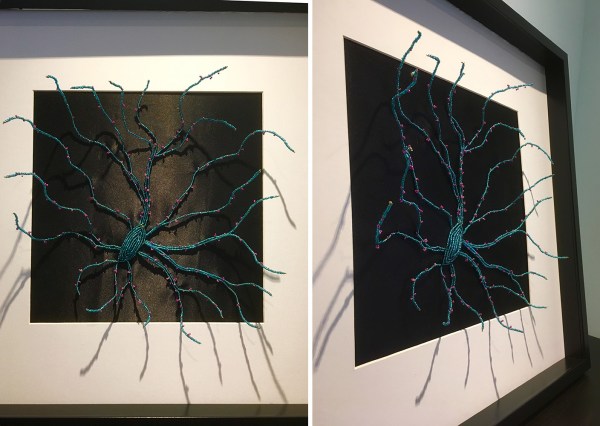
It has been more than three weeks since we've moved into the new apartment. The unpacking process is slow and tortured. A lot of things are still in boxes and difficult to find. One of the things that has been out in the open though, is my latest unfinished piece that I referred to in... Continue Reading →
Dichotomy of 3D renderings of confocal images
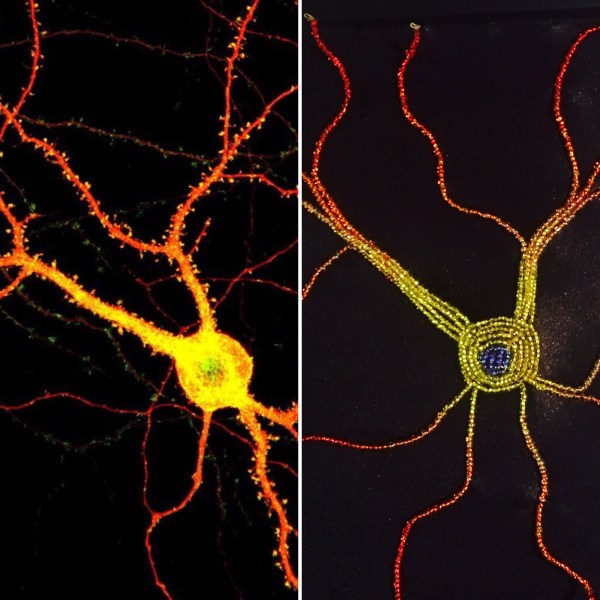
We live in a three dimensional world, yet so many things we face every day are two dimensional representations of three dimensional objects. From paintings and photographs to maps and architectural blueprints, the majority of human creative processes begin on a flat piece of paper. Of course, technology has shown great progress, making way for... Continue Reading →
Neurons on the move
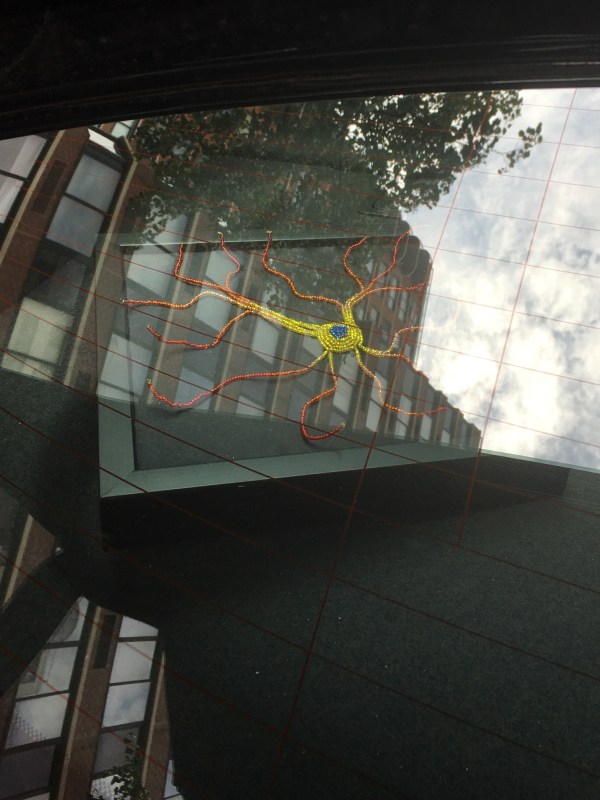
My husband and I have just moved to a new apartment this week. After the movers took care of the furniture and the majority of boxes, we spent the last day personally transporting some of the more precious items. Among them were some of my most recent NeuroBead pieces. As we were getting out of... Continue Reading →
Reigniting an old passion
Welcome to NeuroBead! First, let me introduce myself. My name is Yana Zorina, and I am a cellular neuroscientist with a life long passion for the arts. While the notion may be a bit outdated, it has traditionally been thought that logical thinking and scientific reasoning is primarily driven by the left hemisphere of the... Continue Reading →