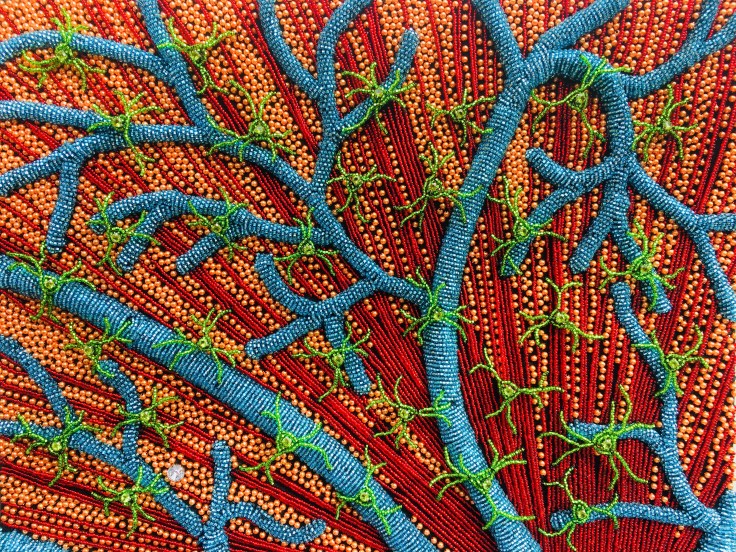
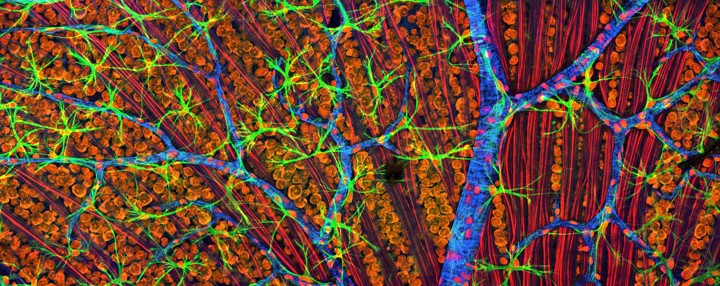
When you look at a finished bead embroidery piece, it’s easy to be dazzled by the pattern, the color, and the sparkles. But the images you see—the curated photographs, the polished angles—tell only part of the story. Finished pieces lie a little. They hide the challenges, the tension, the tiny decisions and missteps that shape every square inch of the work.
Why does this matter? Because seeing the process behind the polish communicates the tremendous amount of effort that was put into the piece, and gives you a window into the craft itself. It’s not just decoration—it’s the result of countless deliberate choices.
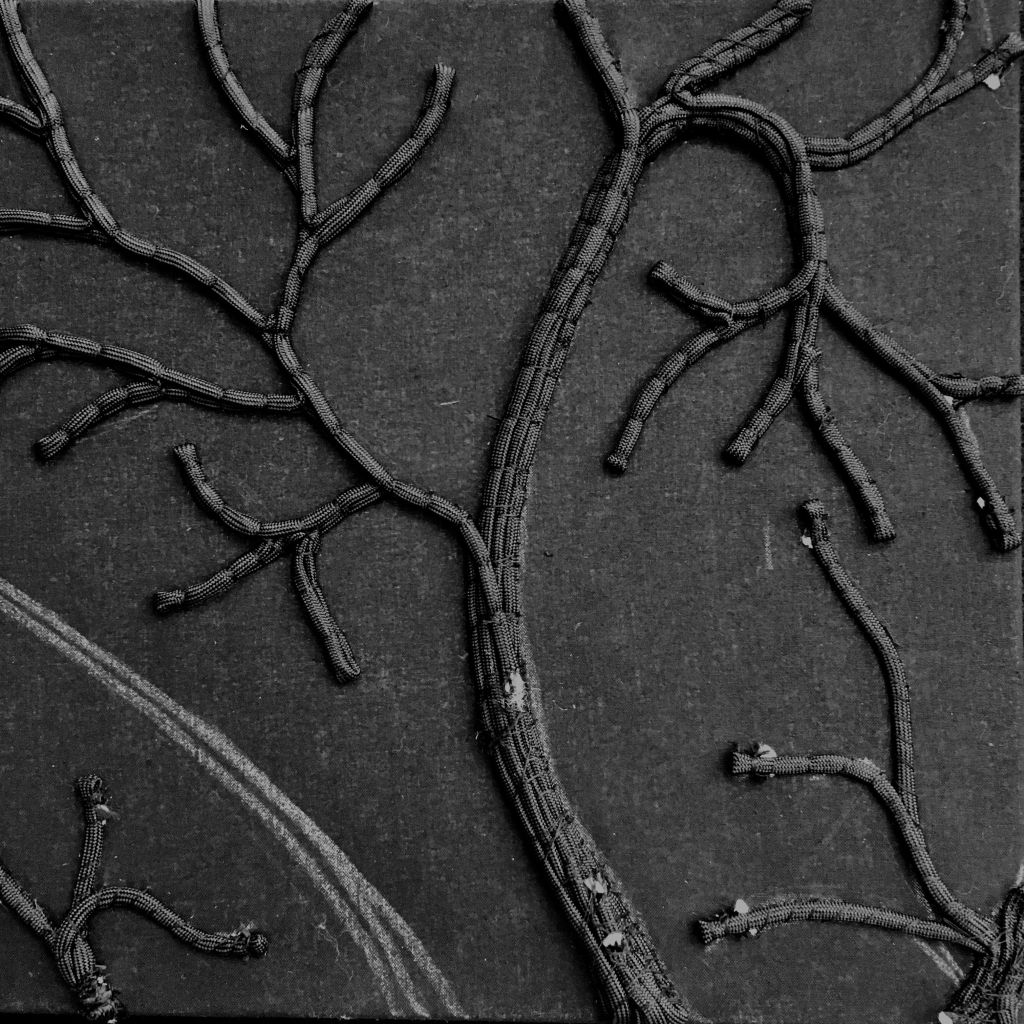
Structural support – the skeleton of the artwork
Every bead you see sits on a carefully planned and stabilized underlayer.
Planning is essential: stretching the fabric, building the structure, even the order in which beads are added – each one these aspects can make or break the artwork.
Compared to other art forms, such as painting or knitting, mistakes in beadwork are very costly. A misaligned row can ripple across the design, forcing a restart or a complicated correction. Replacing one misplaced bead may require undoing many others. What you don’t see is the scaffolding that holds the beauty in place—frameworks that rarely remain visible in their transition from work-in-progress to a finished piece.
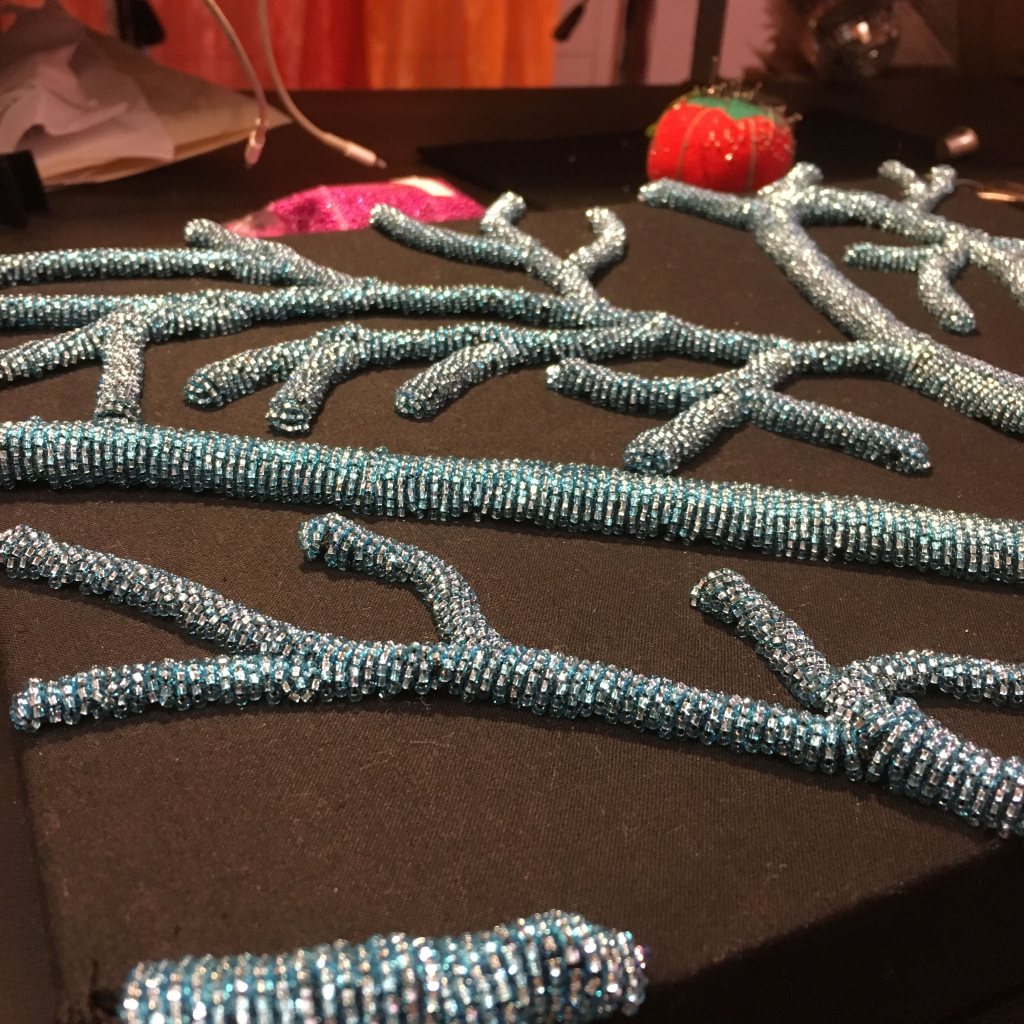
Time Compression
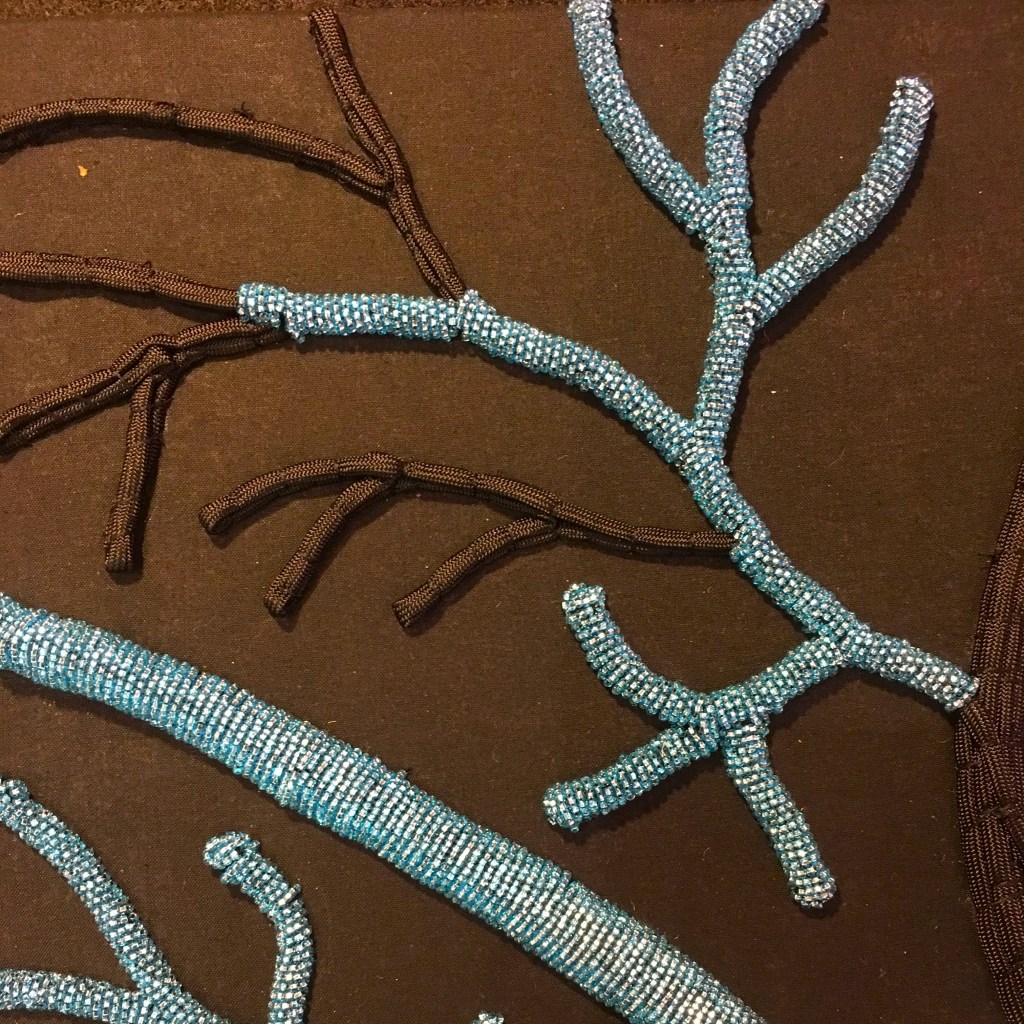
Finished pieces compress weeks or even months of work into a single, polished image. One photograph cannot capture the slow evolution of color compositions, the moments of frustration, or the iterative problem-solving that happens behind the scenes.
Slowness shapes outcomes. It gives me time to reflect, adjust, and refine. Without this temporal dimension, the viewer only sees the end—but the journey is what gives the work its depth and resilience. You might think that these images are repetitive, but so is the process.
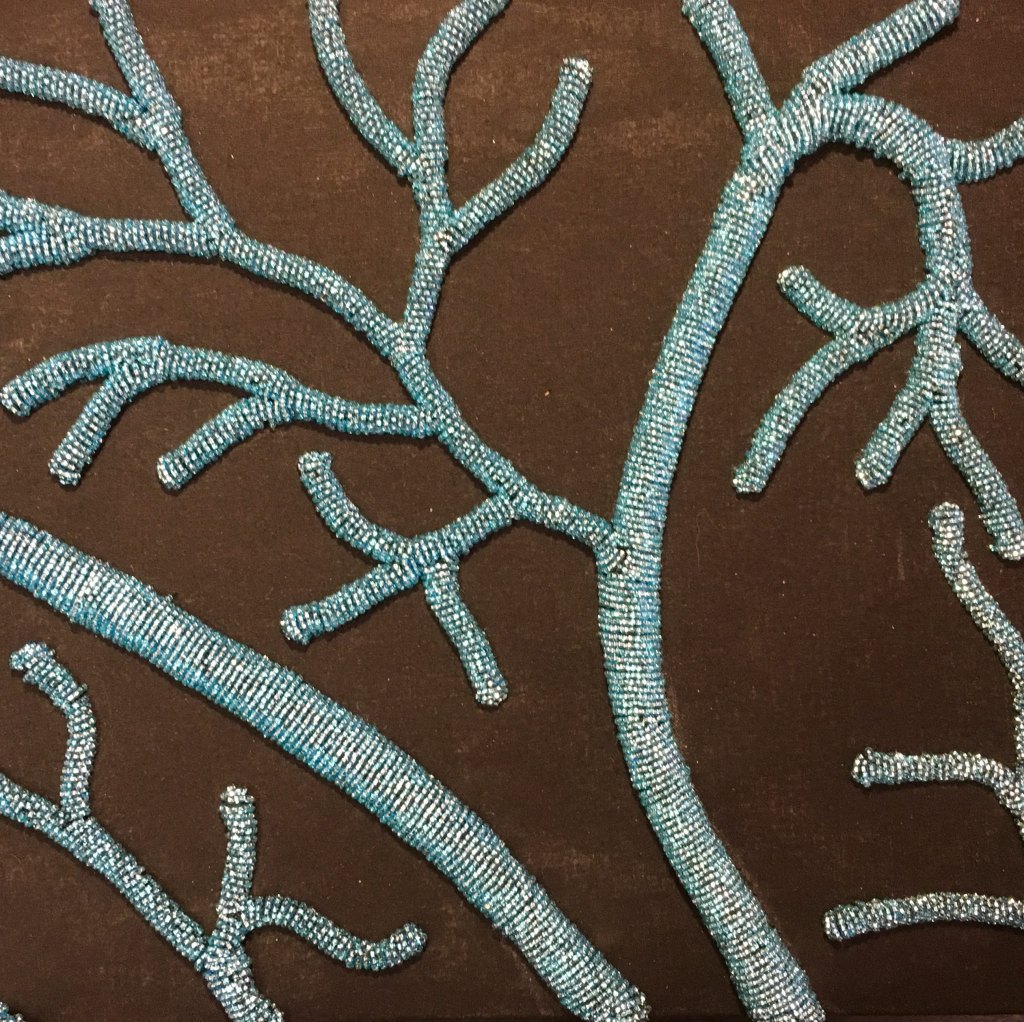
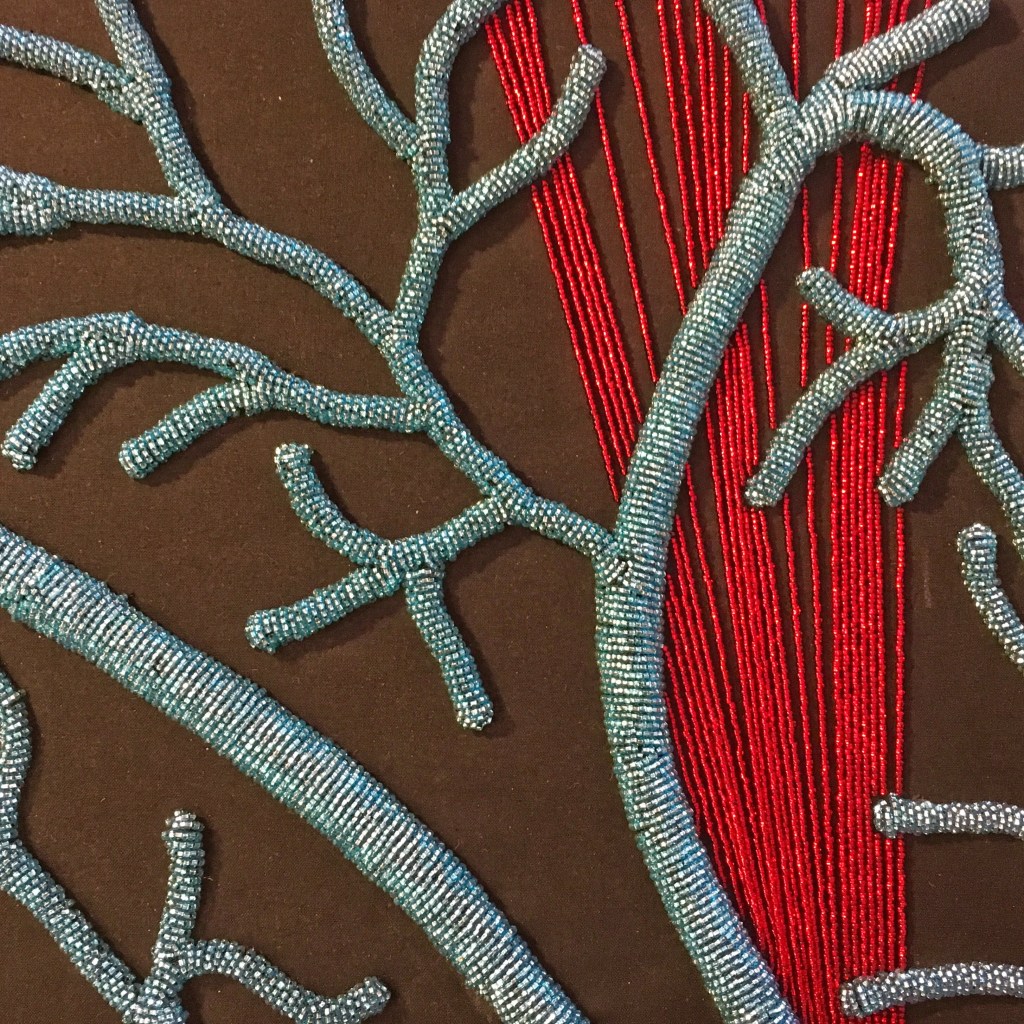
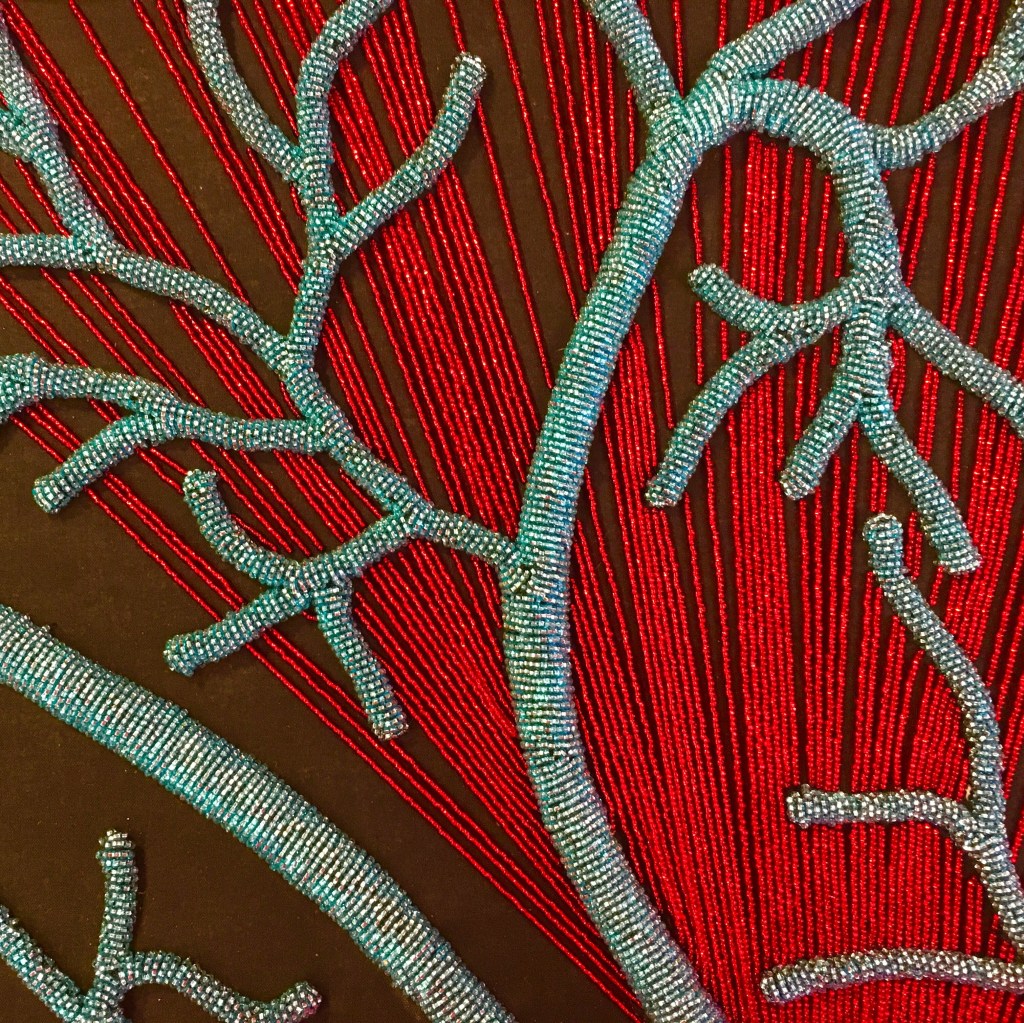
Decisions, decisions, decisions
Bead embroidery is a high-density decision-making process. Each square inch involves dozens of micro-decisions: which bead, which direction, what tension, what spacing. Should I try to fit in an extra bead or leave a little bit of empty space? How will that affect the whole distribution? To me, the imperfections are probably much more visible than to a casual viewer, and these choices accumulate silently into the final piece.
Work-in-progress photos tell the truth. They show how the artist negotiates constraints, experiments with textures, and responds to the piece as it grows. The “messiness” you see in these images is evidence of care, thought, and most importantly patience.
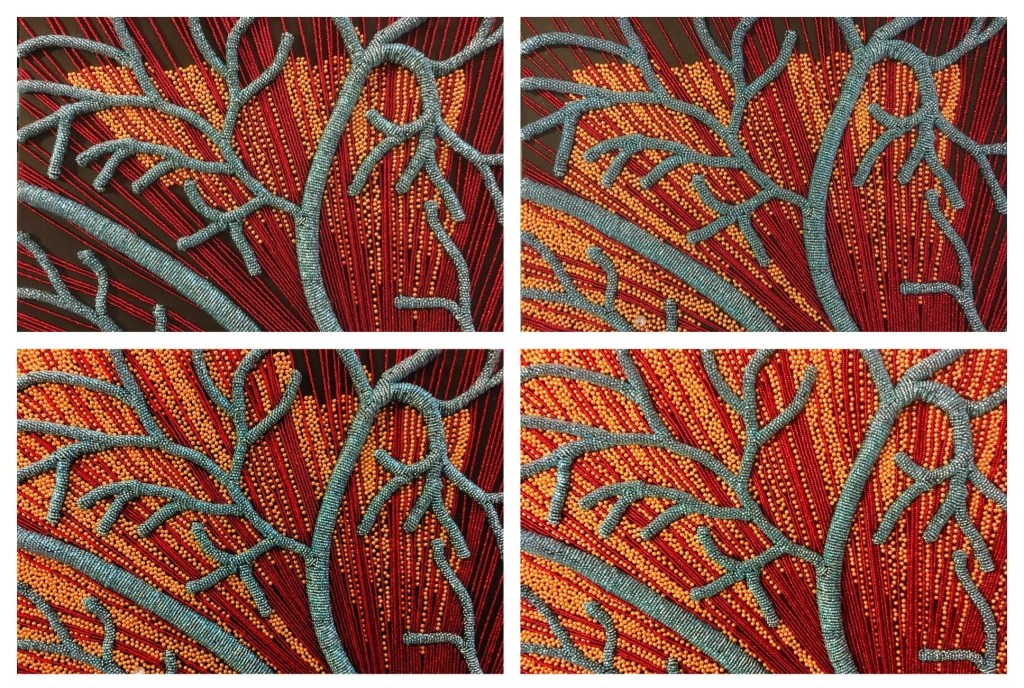
People connect not just with the finished piece, but with the story behind it—the careful planning, countless small decisions, and hidden labor that shape every detail. Documenting and sharing this process gives the work context, builds trust, and communicates value, turning each piece into more than decoration: it becomes a tangible record of creativity and human intention, inviting viewers to see and appreciate the craft that gives it life.