When I was about ten years old, my family took a road trip to Florida. It was our first vacation in the United States, and although the beach and fun nights at the hotel pool left very fond memories, one experience stood out in a completely different way: a visit to the Dalí Museum.
It was my first encounter with abstract art.
At the time, I could not understand it at all. I found a few paintings (such as “the Hallucinogenic Toreador”) aesthetically pleasing, but most of the work felt inaccessible and confusing. I remember thinking that the paintings were pointless — random distortions with no connection to reality. My parents told me that perhaps abstract art was something I would understand when I was older.
For years, I held onto that reaction.
So, what exactly is abstract art?
Art theorist Rudolf Arnheim once described it this way:
“Abstract art uses visual language of shape, form, color and line to create a composition which may exist with a degree of independence from visual references in the world.”

Seeing my own work differently
At first glance, the definition of abstract art seems far removed from science. Scientific imagery is usually associated with precision, evidence, and literal representation. Abstract art, on the other hand, is often associated with ambiguity and interpretation.
But over time, I started realizing something ironic.
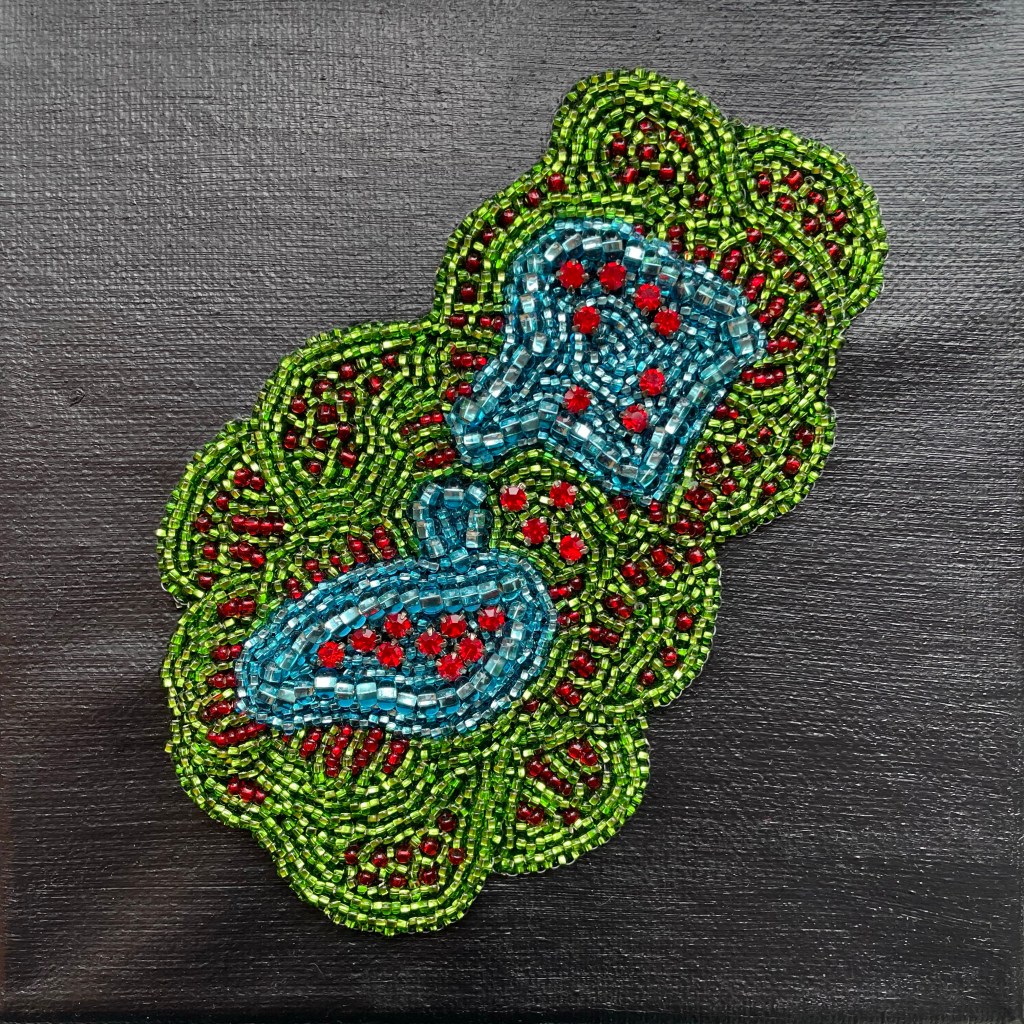
To many people, my own work probably looks abstract too.
Without a biomedical background — or at least without reading the title or description — a viewer encountering one of my microscopy-based artworks might only see geometric shapes, unusual textures, or bursts of color. They may not realize they are looking at neurons, cellular structures, or biological processes unfolding at microscopic scales. The images may appear detached from reality simply because the reality they depict is unfamiliar.
For a while, this bothered me.
I felt an almost compulsive need to explain that my work was “real.” I wanted viewers to understand that these were not invented forms or arbitrary designs. They came directly from living systems — from a world that exists beyond ordinary human vision. Without that context, I worried that I was somehow betraying myself as an artist.
But eventually, after reflecting on this tension for years, something clicked.
The fact that scientific imagery can appear abstract does not diminish its meaning. If anything, it deepens it.
Science constantly reveals realities that are invisible to us: cells communicating, proteins assembling, neurons branching through space. These structures are every bit as real as landscapes or portraits, yet they often resemble something dreamlike or surreal when isolated from their context. The unfamiliarity comes not from abstraction itself, but from the limits of our perception.
And perhaps that is where science and abstract art unexpectedly meet.
Both ask the viewer to sit with uncertainty for a moment. Both invite curiosity before understanding. Both challenge us to look beyond immediate recognition.
Once I accepted this, I made (partial) peace with the tension between scientific accuracy and visual ambiguity. In fact, I began embracing it. The mysterious quality in my work became something valuable rather than something I needed to defend. It allowed me to create images that operate on multiple levels at once: visually intriguing compositions for a casual viewer, but also representations of advanced biomedical research that may someday contribute to breakthroughs and, ultimately, improve lives.
The meaning is there — it simply requires time and attention to uncover.

Learning to let go
That realization also changed the way I think about symbolism in my artwork.
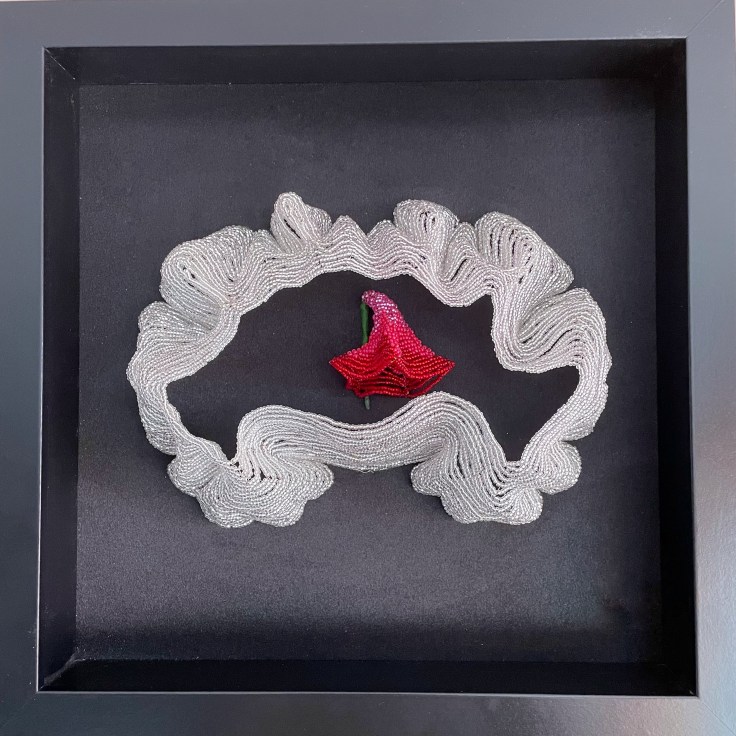
People often talk about the importance of creating relatable art, of embedding emotional meaning that helps viewers connect with an image on a personal level. When I started working on my “Hope” series, I started introducing a small recurring abstract element into some of my pieces: the “hope jewel.”
The jewel is not part of the original microscopy image. It is an intentional addition — a symbolic object representing optimism, resilience, and discovery. I wanted it to function almost like a visual invitation: something that gently pulls the viewer deeper into the piece and encourages a sense of wonder. Finding the jewel is like a small scientific discovery.
And in many ways, that tiny abstract addition clarified something larger for me.
Literal scientific images can represent abstract human concepts.
A neuron can symbolize connection. Cellular growth can represent healing or transformation. Microscopic structures can evoke isolation, fragility, resilience, or hope. Even when grounded entirely in scientific reality, these images are capable of carrying emotional and philosophical meaning far beyond their original biological context.
Ironically, it took me years to understand the thing that confused me so much as a child standing in a museum full of abstract paintings.
Abstract art was never really about abandoning reality.
Sometimes it is simply about learning how to see reality differently.