Have you ever looked at a pixelated image from too close?
At first, all you see are squares. Sharp edges. Blocks of color that seem disconnected from one another. The image makes little sense.
Then you take a few steps back.
Suddenly, those random squares become a face, a landscape, or a familiar object. Nothing about the image has changed. The only thing that changed was your perspective.
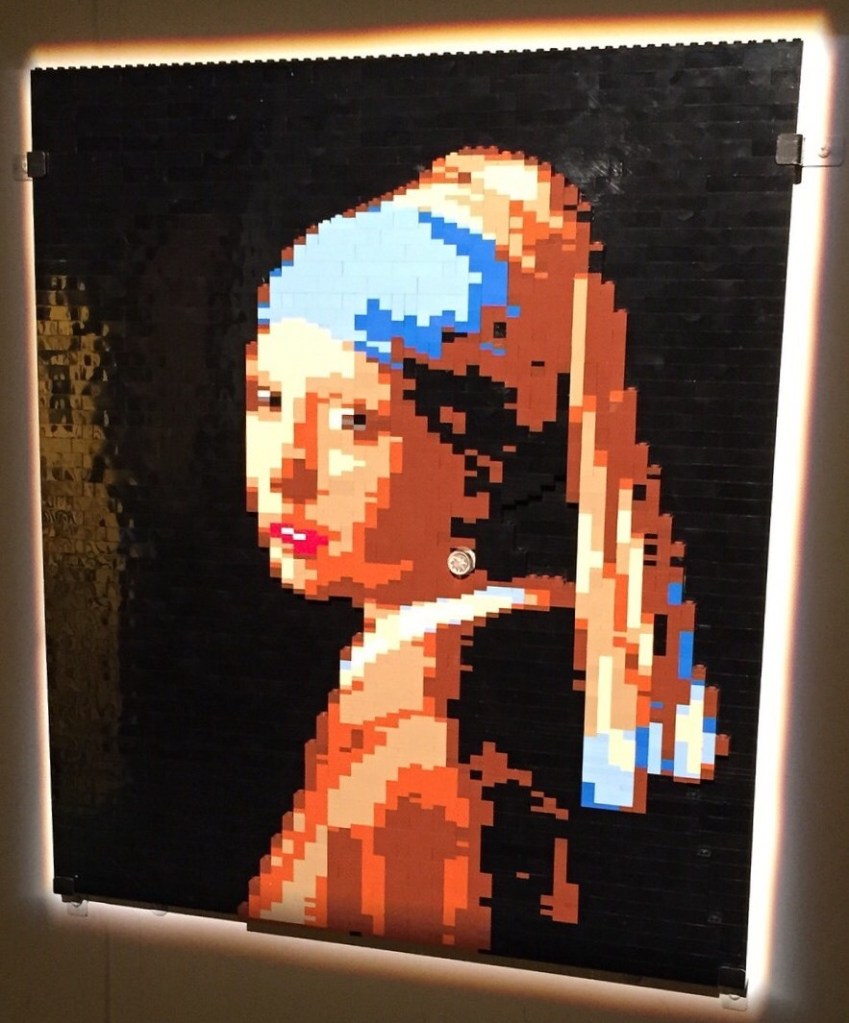
from “Art of the Brick” exhibit in
New York City in 2016
I have always found this transformation fascinating because it mirrors so many experiences outside of art.
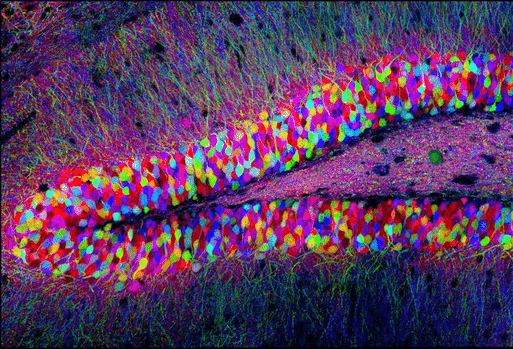
In science, we often spend months focusing on tiny details. We optimize experiments, troubleshoot protocols, and analyze individual data points. Looking at the work day by day, it can feel fragmented and disconnected.
Only later, when we step back and examine the larger body of evidence, do patterns begin to emerge.
The same is true in creative work.
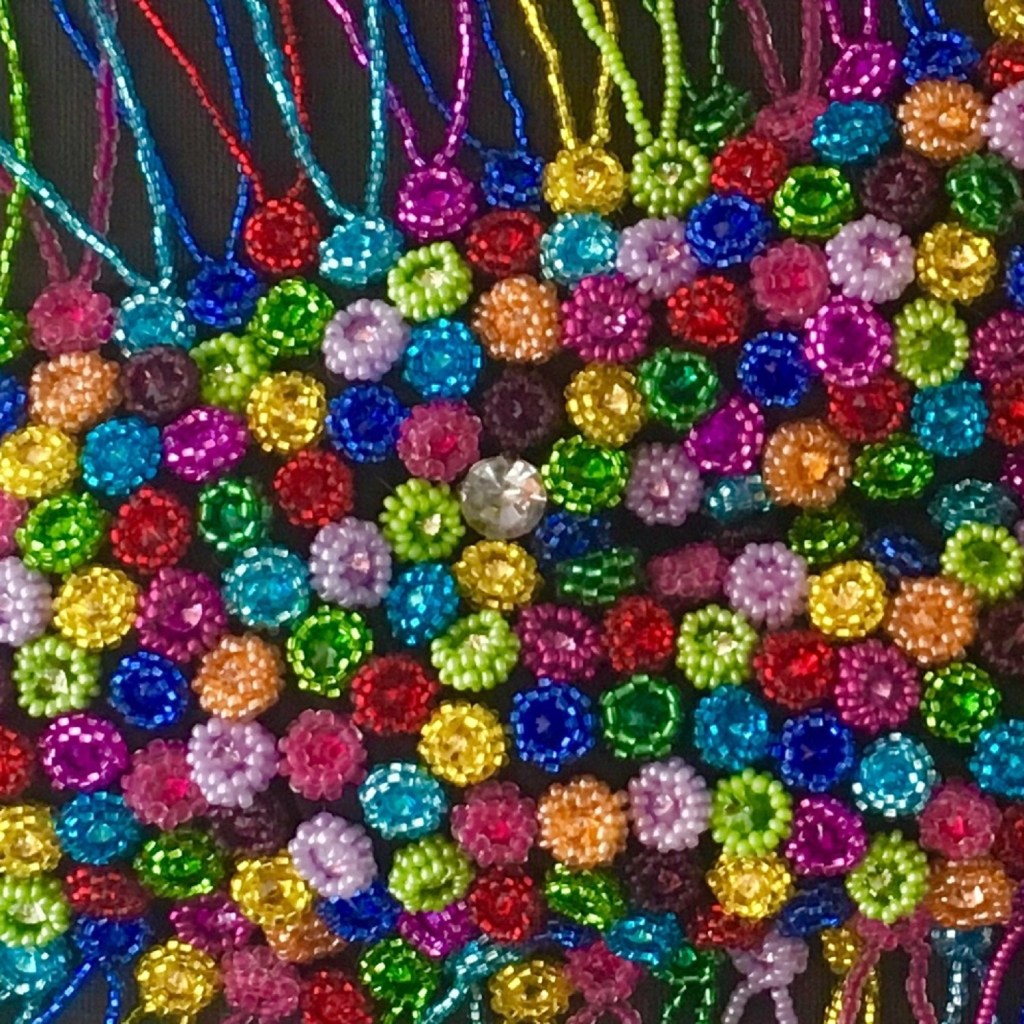
When I create beadwork inspired by microscopy images, I spend hours wiring and sewing on individual beads. During this process, I am often concentrating on a small section of the piece. Sometimes working with a single color for long stretches of time. Tiny decisions that seem insignificant on their own, but as thousands of beads accumulate, larger structures begin to emerge.
Cells appear.
Neurons take shape.
Abstract patterns become biological landscapes.
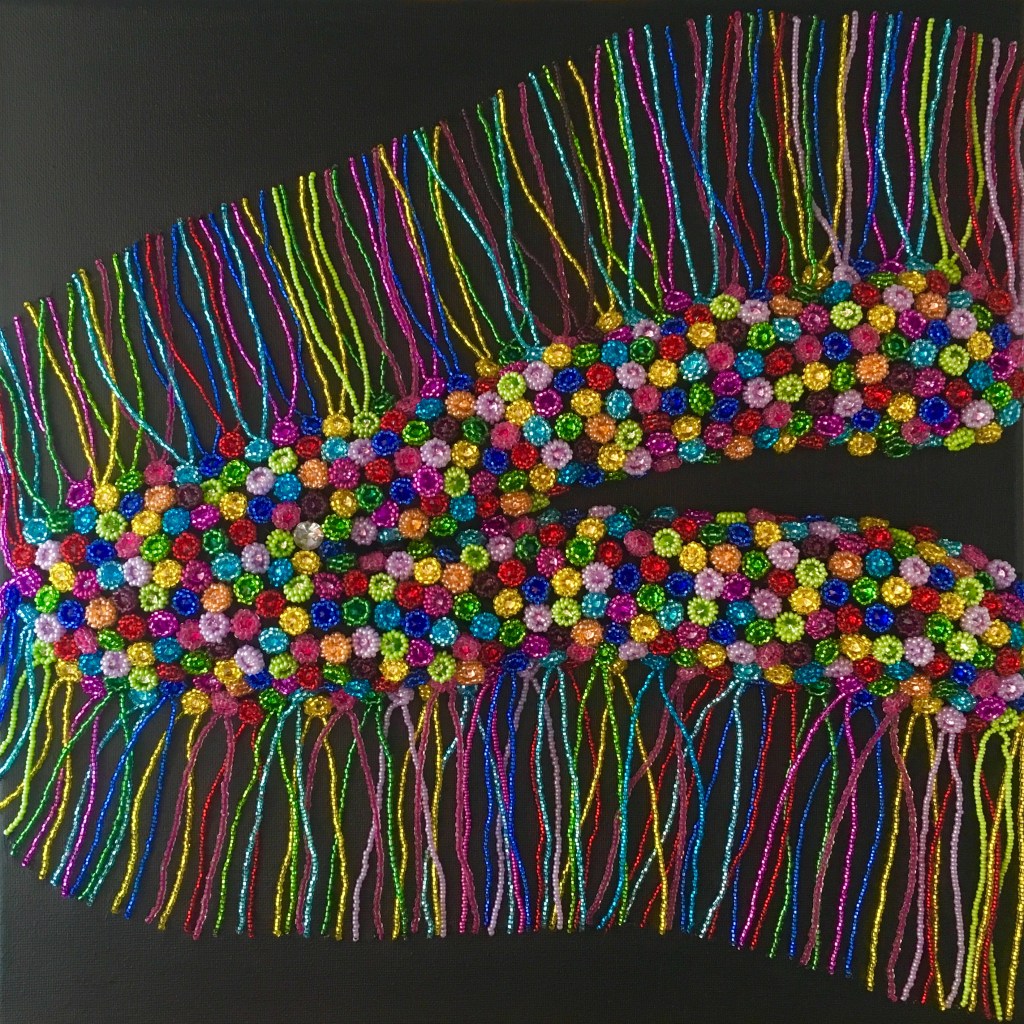
This transformation reminds me of ancient mosaics and pointillist paintings. Artists have been using collections of small elements to create larger images for centuries. Digital technology did not invent this idea—it simply gave it a new form.
What fascinates me most is how willing our brains are to participate in the process. Rather than passively recording the world around us, our visual system is constantly interpreting, filling gaps, and constructing meaning from incomplete information.
We do not consciously analyze every pixel in a photograph or every brushstroke in a painting. Instead, our visual system assembles the pieces into something meaningful. We see wholes rather than parts.
This ability allows us to recognize faces in low-resolution images, identify objects in blurry photographs, and appreciate artworks composed of thousands of individual elements.


When people view one of my beadwork pieces, they often move closer and then farther away.
Up close, they notice the beads.
From a distance, they notice the image.
Neither view is more correct. The final image exists somewhere between reality and interpretation.
Perhaps that is why pixelated images continue to fascinate us. They reveal an important truth: understanding often depends less on gathering more information and more on changing our perspective.
Sometimes the clearest picture appears only when we stop looking so closely.
Whether we’re studying cells, creating art, or trying to make sense of our own lives, stepping back can reveal patterns we’ve never noticed before.


Leave a comment