
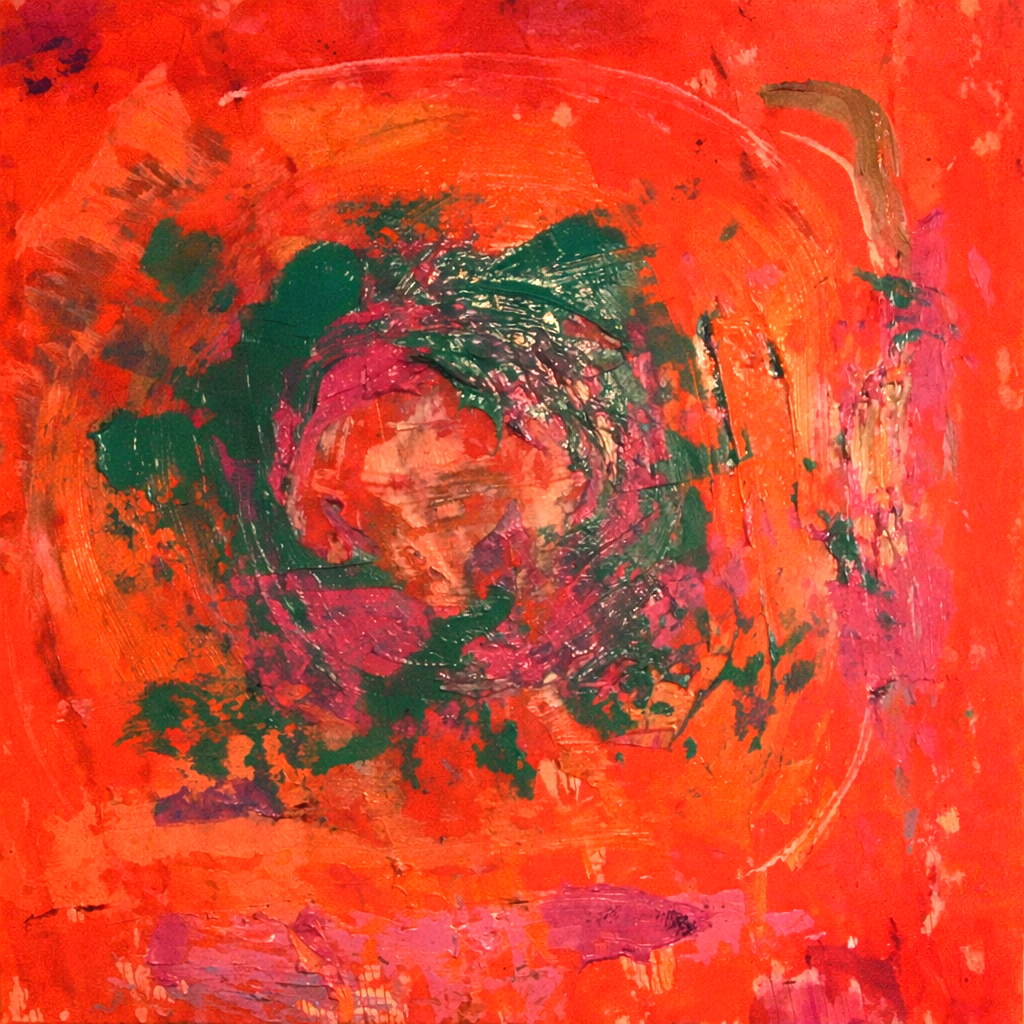
Some objects become part of a place so completely that you stop noticing them—until years later, when you see them again and a flood of memories comes rushing back.
That happened to me during a visit to my graduate school department several years ago. I stopped by to say hello to my old advisor, but he was in the middle of a meeting. As I waited, I took a look around the main office, trying to find the old connection. Much had changed over the years since I left. Some offices had new occupants. Furniture had been replaced. People had moved on, building careers and forging new paths. Yet one thing remained exactly where I remembered it: a large abstract painting called Orange Pleasure.
Seeing it again brought back a surprisingly vivid memory.
I was a graduate student at the time, when the entire lab was invited to a small reception in the department Chair’s office. There was wine, cheese, and crackers—any graduate student’s dream. Most of us would probably have preferred to stay in the lab and continue working, but attendance felt borderline mandatory. We were expected to show our support.
The occasion was the presentation of Orange Pleasure, a painting that our professor had received from an artist he randomly met at a social event.
As he accepted the gift, my advisor gave a short speech about the importance of art in scientific life. He spoke about the gray existence of the laboratory and our need for more color, creativity, and imagination to brighten our days. He explained that, because the painting was abstract, each one of us would see something different in it. Perhaps we would discover inspiration in its forms and colors. Perhaps we would even see scientific ideas reflected back at us, such as signal transduction pathways spreading and rippling through cells.
I remember standing there thinking that this was quite a stretch, and trying to hold back a sarcastic smile.
The painting bore little resemblance to anything we actually studied. No amount of imagination was going to make me see molecular signaling cascades in an abstract swirl of orange paint.
The painting remained
Looking at Orange Pleasure all these years later, I still wasn’t convinced by my advisor’s enthusiasm. I still don’t think abstract paintings inspire scientific breakthroughs, and I remain skeptical that a splash of orange on a wall can transform the daily realities of grant deadlines, failed experiments, and endless troubleshooting.
What struck me instead was the painting’s persistence.
Long after many of the people who stood around that reception had moved on, Orange Pleasure remained, standing out in the otherwise mostly gray office. It had become part of the department’s history, a familiar landmark in a place where I spent some of the most formative years of my life.
The persistence of objects
I’ve written before about another artwork that stayed with me for decades after a single encounter. Like that experience, seeing Orange Pleasure again reminded me that some pieces of art become significant not because of what they depict, but because of when they enter our lives.
Looking back, I now realize my skepticism wasn’t really about the painting itself. It was about the attempt to justify art in scientific terms. The painting needed no connection to cell signaling to earn its place on the wall. Yet framing it as a source of scientific inspiration may have felt like the easiest way to convince a room full of researchers that it mattered.
A different kind of seeing
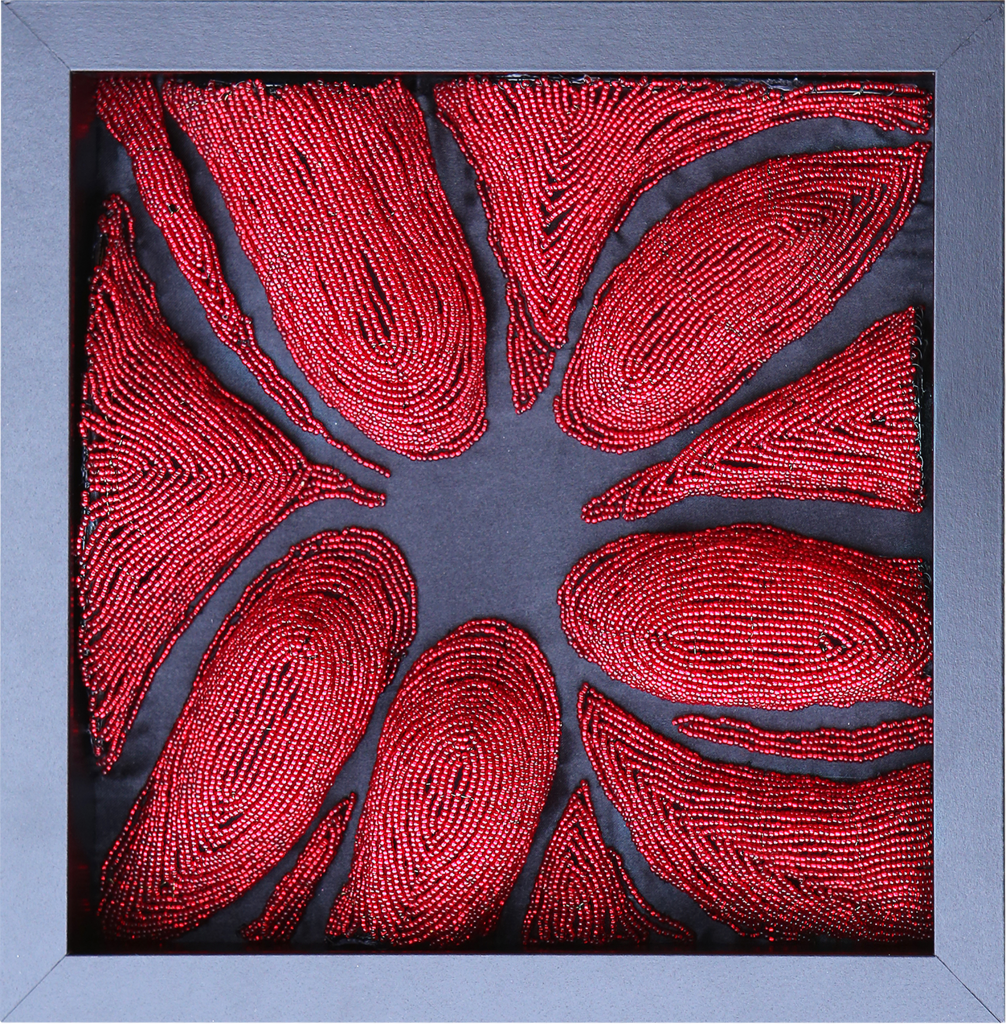
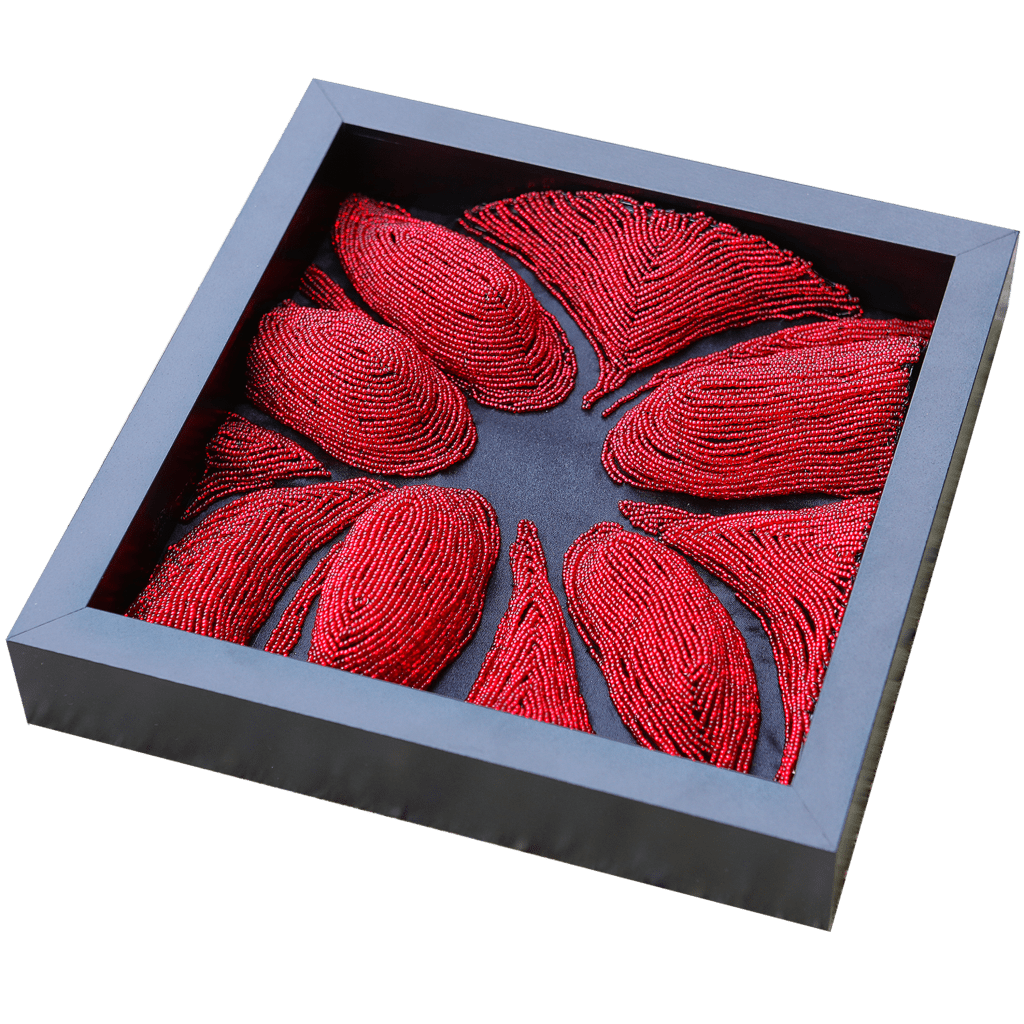
These days, I spend a significant amount of my free time making art myself. Not because I believe every abstract shape carries profound meaning, but because creating things offers a different kind of satisfaction than analyzing them. Science taught me to ask questions and seek answers. Art allows me to linger in uncertainty a little longer.
Today I still don’t see signal transduction pathways when I look at abstract paintings. But I understand something I didn’t appreciate as a graduate student.
Not everything valuable needs to justify itself through productivity, innovation, or measurable outcomes. Orange Pleasure never transformed my research. It never sparked a breakthrough experiment. Yet over a decade later, it remains one of the most memorable objects from that chapter of my life.
Perhaps that is enough.
Sometimes art becomes meaningful not because it changes what we do, but because it quietly accompanies us through a particular moment in time. Long after the experiments, deadlines, and publications have been replaced by new life challenges, the painting is still there.
And because Orange Pleasure arrived during my years in graduate school and remained long after I left, it somehow became part of my story too.


Leave a Reply